
Key Takeaways
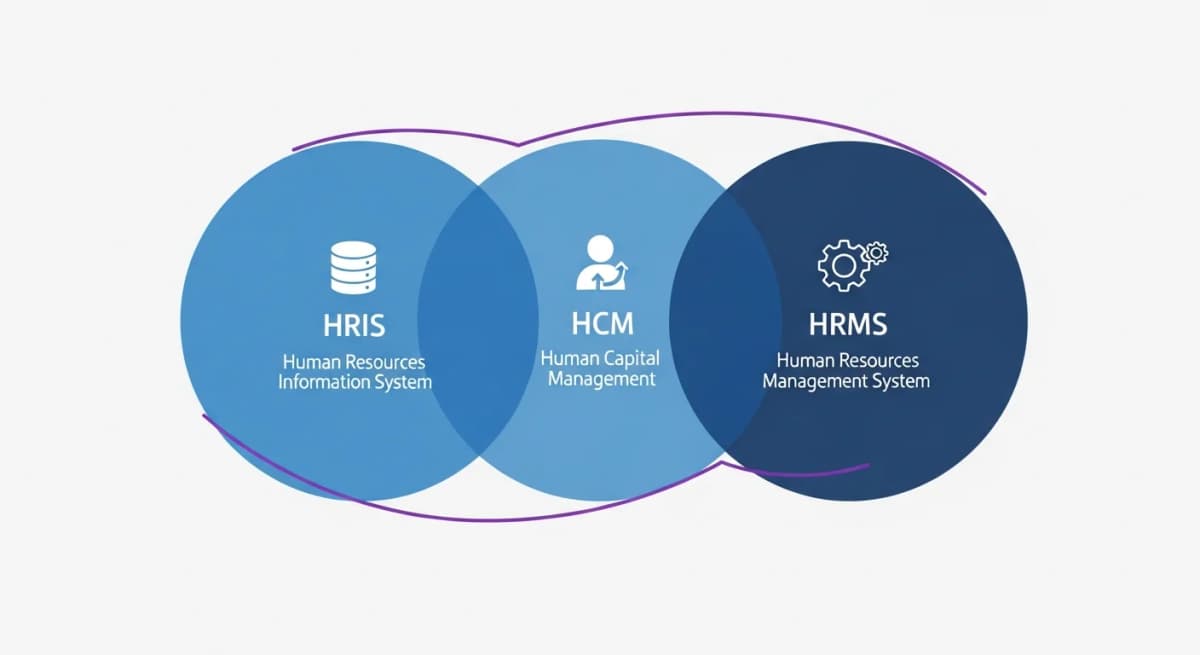
- HRIS focuses on employee data and core HR administration; HRMS adds payroll and workforce management; HCM covers the full talent lifecycle.
- In practice, the lines between HRIS, HRMS, and HCM have blurred significantly - most modern platforms cross categories.
- Don't choose based on category labels - evaluate based on the specific features and integrations your team needs.
- Unified platforms like Alexia.ai transcend these categories by including HR, recruitment, and collaboration in one system.
The Alphabet Soup of HR Software
If you've researched HR software, you've encountered three overlapping acronyms: HRIS, HRMS, and HCM. Vendors use these terms inconsistently, making it genuinely confusing to understand what you're buying.
Historically, these terms represented distinct categories with different scopes. In 2026, the lines have blurred considerably - most modern platforms include features from all three categories. Understanding the original distinctions still helps you evaluate what you actually need.
HRIS: Human Resource Information System
HRIS is the foundational layer of HR technology. It focuses on storing and managing employee data - records, organisational structure, time-off tracking, benefits enrollment, and basic reporting.
Think of HRIS as the database layer for your people operations. It's where employee information lives and where basic HR workflows are automated. Core functions include employee self-service portals, document management, and compliance tracking.
Best for: Companies that need organised employee data and basic HR administration without complex workforce management or talent development features. Examples include BambooHR and the HRIS component of Alexia.ai.
HRMS: Human Resource Management System
HRMS extends HRIS by adding payroll processing, workforce management, and operational HR functions. While an HRIS focuses on data, an HRMS focuses on processes - running payroll, managing schedules, tracking time and attendance, and handling benefits administration.
The key differentiator is the inclusion of payroll and financial HR components. An HRMS typically handles tax calculations, direct deposit, wage garnishments, and statutory reporting.
Best for: Companies that want to combine employee data management with payroll and workforce operations in one system. Examples include ADP Workforce Now and Paychex Flex.
HCM: Human Capital Management
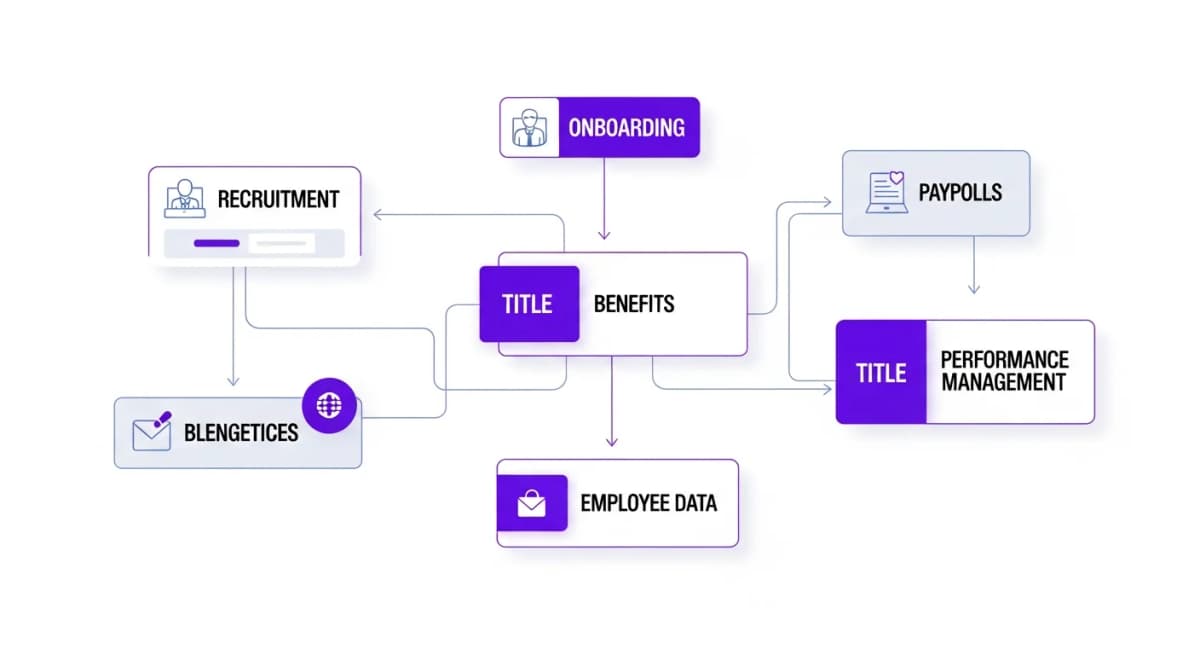
HCM is the broadest category, encompassing HRIS and HRMS functions while adding talent management, learning, and strategic workforce planning. HCM platforms treat employees as capital to be developed, not just resources to be administered.
Additional HCM capabilities typically include talent acquisition (ATS), performance management, learning management (LMS), succession planning, compensation management, and workforce analytics.
Best for: Large enterprises that need comprehensive talent lifecycle management from hire to retire. Examples include Workday, SAP SuccessFactors, and Oracle HCM Cloud.
Stop reading about AI reporting. Start using it.
See how Alexia.ai automates the exact workflows covered in this article.
Why the Distinction Matters Less in 2026
Modern HR platforms have blurred these categories almost beyond recognition. BambooHR (traditionally an HRIS) now includes performance management. Gusto (traditionally payroll/HRMS) includes basic hiring features. Every vendor is expanding into adjacent categories.
The more useful question in 2026 isn't "do I need an HRIS, HRMS, or HCM?" - it's "what specific capabilities does my team need, and which platform delivers them with the least complexity?"
Platforms like Alexia.ai sidestep the categorisation entirely by including HRIS functions, recruitment (ATS), team collaboration, and AI-powered analytics in one system. Whether you call that an HRIS, HCM, or operating platform matters less than whether it solves your actual problems.
Choosing Based on Needs, Not Labels
Map your requirements to features, not categories. Ask:
Do you need payroll processing? → Look for HRMS-class features or integrate with a payroll provider. Do you need talent acquisition? → Look for built-in ATS or HCM platforms that include recruitment. Do you need performance management? → Available in HRIS, HRMS, and HCM platforms depending on the vendor. Do you need team collaboration? → Very few HR platforms include this - Alexia.ai is an exception.
The best approach in 2026 is choosing a platform that covers your most critical needs natively and integrates well with specialised tools for everything else. Or, choose a unified platform that minimises the number of separate tools entirely.

About the Author
Simon Jones
Co-Founder, Teamified
Simon Jones is the co-founder and CTO of Teamified, bringing decades of experience in technology, system architecture, and business transformation. He oversees the technical direction of Alexia.ai, ensuring the platform delivers enterprise-grade automation and intelligence.
Connect on LinkedInSee Alexia.ai's All-in-One Approach
Beyond HRIS, HRMS, and HCM - one platform for everything. See the full Launch Offer.