
Key Takeaways
- Manual reporting wastes 15–20 hours per team member per month on average
- Identify your highest-frequency reports first - automating these delivers the biggest time savings
- AI tools can replicate and improve your existing report formats without starting from scratch
- Freed-up time from automation should be reinvested into analysis and strategic decision-making
The True Cost of Manual Work
Manual work is the silent productivity killer in every business. It's not the big, obvious tasks that drain your team - it's the small, repetitive ones that add up: copying data between systems, formatting reports, chasing status updates, triaging emails, and compiling meeting notes.
Research shows that the average knowledge worker spends 60% of their time on "work about work" - tasks that support actual productive work but don't directly create value. That's three days out of every five spent on overhead instead of strategy, creativity, or decision-making.
Identify Your Biggest Manual Work Drains
Before you can reduce manual work, you need to find it. Here are the most common offenders:
Reporting and data collection - Pulling data from multiple platforms, formatting it, and distributing it. This alone accounts for 5-10 hours per week for many teams.
Email management - Reading, sorting, responding, and forwarding. The average professional spends 28% of their workday on email.
Status updates and check-ins - Manually gathering progress updates from team members, then compiling them into summaries.
Task creation and follow-up - Extracting action items from meetings, creating tasks, assigning them, and chasing completion.
Data entry and reconciliation - Entering information into multiple systems and making sure they match.
How AI Eliminates Repetitive Tasks
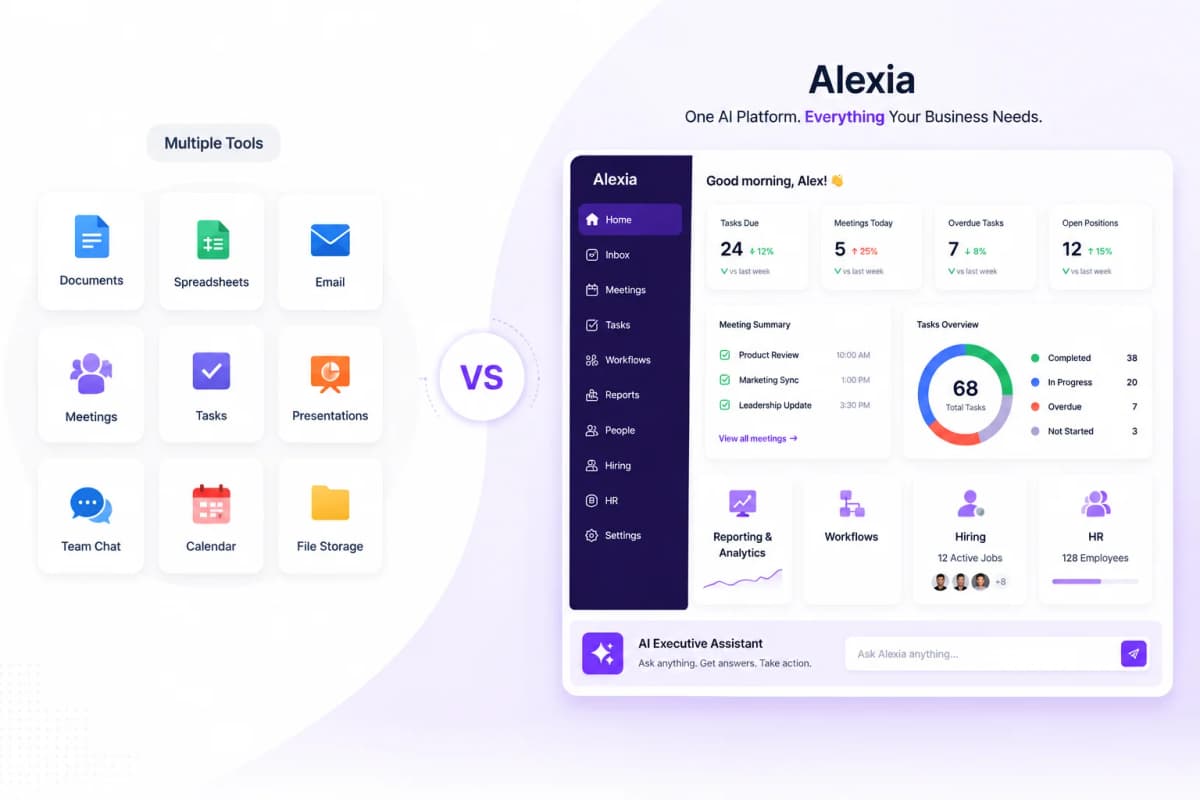
AI-powered business tools like Alexia.ai can automate the most time-consuming manual workflows:
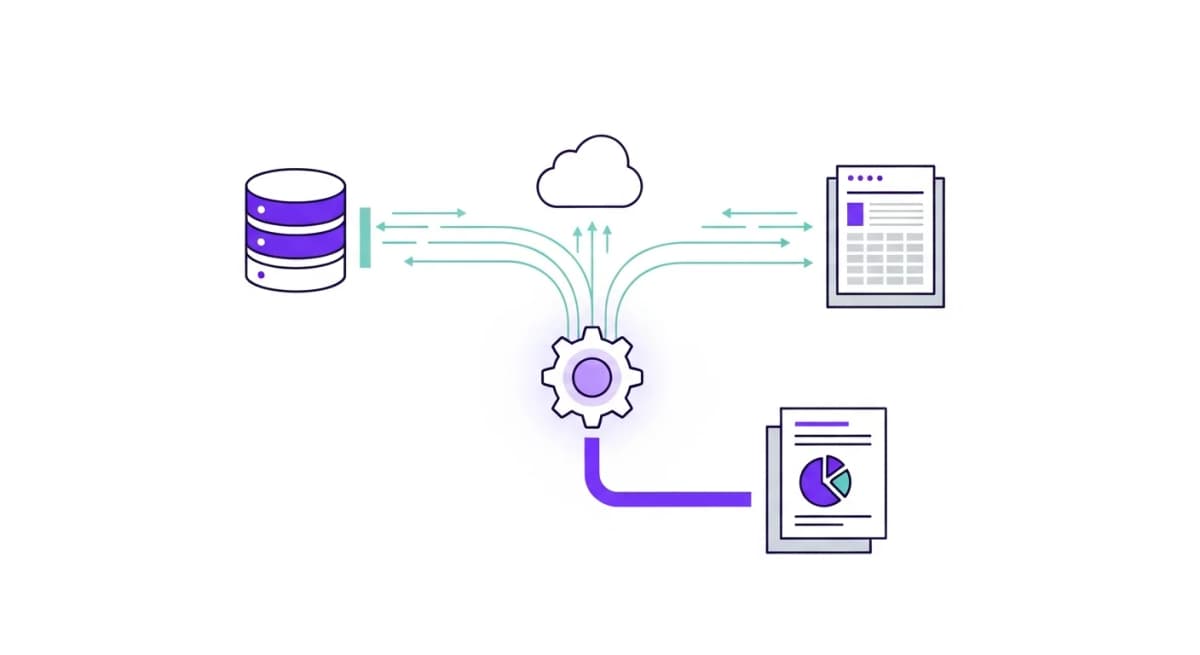
Automated reporting - Connect your data sources once, then generate any report with a simple question. No exports, no spreadsheets, no formatting.
Email intelligence - AI reads your inbox, summarises what matters, flags urgent items, and drafts responses. You review and send instead of reading everything.
Goal tracking - Set goals once and let AI monitor progress, flag risks, and generate status updates automatically.
Task management - AI extracts action items from conversations, creates tasks, assigns owners, and follows up on deadlines.
Cross-platform queries - Instead of logging into five different tools, ask one question and get a unified answer.
Stop reading about AI reporting. Start using it.
See how Alexia.ai automates the exact workflows covered in this article.
A Practical Framework for Automation
Use this three-step framework to systematically reduce manual work:
1. Audit - Track how your team spends their time for one week. Tag every task as "value-creating" or "operational overhead." You'll likely find that 50-70% falls into overhead.
2. Prioritise - Rank your manual tasks by two factors: time spent and frequency. A task that takes 30 minutes daily is a better automation candidate than one that takes 2 hours monthly.
3. Automate progressively - Start with your highest-impact task. Connect the relevant tools to Alexia.ai, automate that workflow, and measure the time saved. Then move to the next one.
Most teams can eliminate 10-15 hours of manual work per week within the first month.
The Compounding Returns of Automation
Reducing manual work doesn't just save time - it compounds. When your team isn't buried in operational tasks, they make better decisions, respond faster to opportunities, and have more energy for creative and strategic work.
The businesses that will win in 2026 and beyond aren't just using AI as a novelty. They're using it to systematically eliminate every hour of manual work that doesn't need a human touch.

About the Author
Simon Lee
Co-Founder, Teamified
Simon Lee is the co-founder and CEO of Teamified, with deep expertise in cloud architecture, fintech, and SaaS platforms. He leads the vision behind Alexia.ai, designing AI-powered solutions that drive operational efficiency and business growth across global teams.
Connect on LinkedInStart reducing manual work
Connect your tools to Alexia.ai and automate your biggest time drains.