
Key Takeaways
- Most businesses lack cross-department visibility because data is trapped in department-specific tools
- AI platforms create unified visibility by connecting to all business tools and making data accessible through conversation
- Real-time visibility replaces weekly status meetings with on-demand access to current business performance
- Full operational visibility is achievable in days with AI - no data warehouse or BI team required
The Visibility Gap in Business Operations
Every business leader wants a clear, real-time view of how the business is performing. Very few actually have it.
The reason is structural: business data lives in department-specific tools. Marketing data is in Google Analytics and Meta Ads. Sales data is in HubSpot or Salesforce. Financial data is in Xero or QuickBooks. Project data is in Asana or Jira.
Getting a unified view requires manually extracting data from each system, combining it in a spreadsheet, and trying to make sense of the whole picture. This process is so time-consuming that most businesses only do it monthly - which means they're making daily decisions based on month-old data.
What Real-Time Visibility Looks Like
True operational visibility means any authorised person can ask a question about business performance and get an accurate, current answer immediately.
"How did marketing perform this week compared to last?" "Are we on track for our quarterly revenue target?" "Which department has the highest project backlog right now?" "What's our current customer acquisition cost across all channels?"
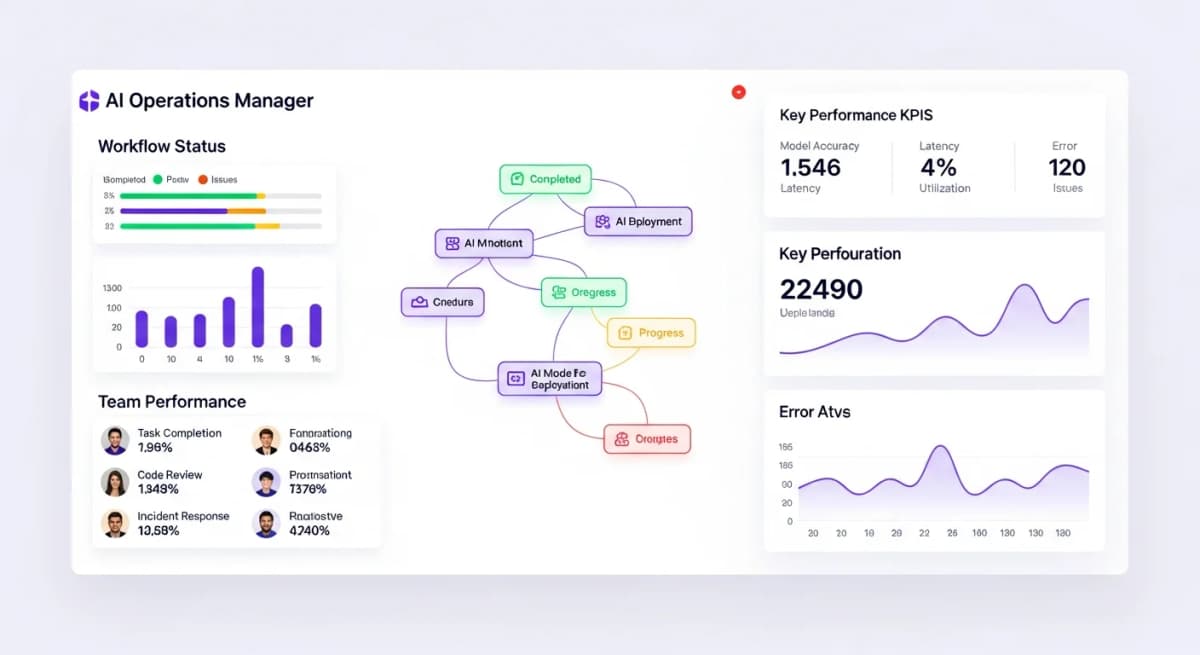
With AI-powered visibility, these questions get answered in seconds using live data from all connected systems. No report building, no data pulling, no waiting.
Traditional Approaches and Their Limitations
Dashboards - Useful but limited. They show pre-configured views of pre-selected metrics. If your question isn't on the dashboard, you're back to manual analysis.
Data warehouses - Powerful but expensive and slow to implement. Require dedicated data engineering resources and months of setup.
BI tools - Flexible but complex. Tools like Tableau and Power BI require training, configuration, and ongoing maintenance.
Spreadsheets - Universal but unscalable. Manual data entry, formula errors, and version control problems make spreadsheets unreliable at scale.
All of these approaches share a common flaw: they require significant setup and maintenance, and they can't answer ad-hoc questions without additional work.
The AI-Powered Visibility Approach
AI platforms like Alexia.ai solve the visibility problem differently. Instead of building dashboards or data warehouses, you simply connect your business tools and start asking questions.
Alexia.ai connects to 180+ platforms via OAuth in minutes. Once connected, all data is accessible through natural conversation. There's no dashboard to build, no data model to design, and no SQL to write.
The AI understands relationships between data sources automatically. It knows that HubSpot deals relate to Xero invoices, that Google Analytics traffic connects to Meta Ads campaigns, and that project timelines affect resource capacity.
This creates a truly unified view of business operations - accessible to anyone, not just people who know how to use BI tools.
Stop reading about AI reporting. Start using it.
See how Alexia.ai automates the exact workflows covered in this article.
Building Your Visibility Layer
Here's how to build real-time operational visibility for your business:
Day 1: Connect your core tools - Start with your CRM, accounting platform, and analytics tool. This gives you visibility across sales, finance, and marketing.
Day 2: Add operational tools - Connect project management, communication, and HR platforms for full operational visibility.
Day 3: Set up monitoring - Configure goal tracking and KPI alerts so you're notified when anything needs attention.
Ongoing: Ask and learn - Use Alexia.ai's conversational interface to explore your data, generate reports, and surface insights. The more you ask, the more valuable the visibility becomes.
Most businesses achieve full cross-department visibility within a week - compared to months with traditional BI implementations.
The Business Impact of Visibility
Businesses with real-time operational visibility consistently outperform those without it:
- Faster decisions - Questions get answered in seconds, not days - Better alignment - All departments work from the same data - Earlier intervention - Problems are detected before they escalate - Reduced meeting time - Less need for status update meetings when data is always accessible - Improved accountability - Transparent metrics drive better performance
The compound effect of these improvements is significant. Operations teams with full visibility spend less time on admin, make better decisions, and deliver better results.

About the Author
Simon Lee
Co-Founder, Teamified
Simon Lee is the co-founder and CEO of Teamified, with deep expertise in cloud architecture, fintech, and SaaS platforms. He leads the vision behind Alexia.ai, designing AI-powered solutions that drive operational efficiency and business growth across global teams.
Connect on LinkedInGet full operations visibility
Connect your business tools to Alexia.ai and see your entire operation in real-time.