
Key Takeaways
- Start your ATS evaluation by mapping your actual hiring workflow - not by comparing feature lists.
- Total cost of ownership matters more than per-seat pricing - factor in integrations, training, and adjacent tools.
- Prioritise ATS platforms that integrate with (or include) your HR and communication tools.
- The best ATS is one your team will actually use consistently - ease of use trumps feature depth.
Start with Your Hiring Reality, Not Feature Lists
Most companies choose an ATS backwards. They start by comparing feature lists across vendors, get overwhelmed by options, and make a decision based on demos and pricing. The result? An expensive tool that doesn't match how your team actually hires.
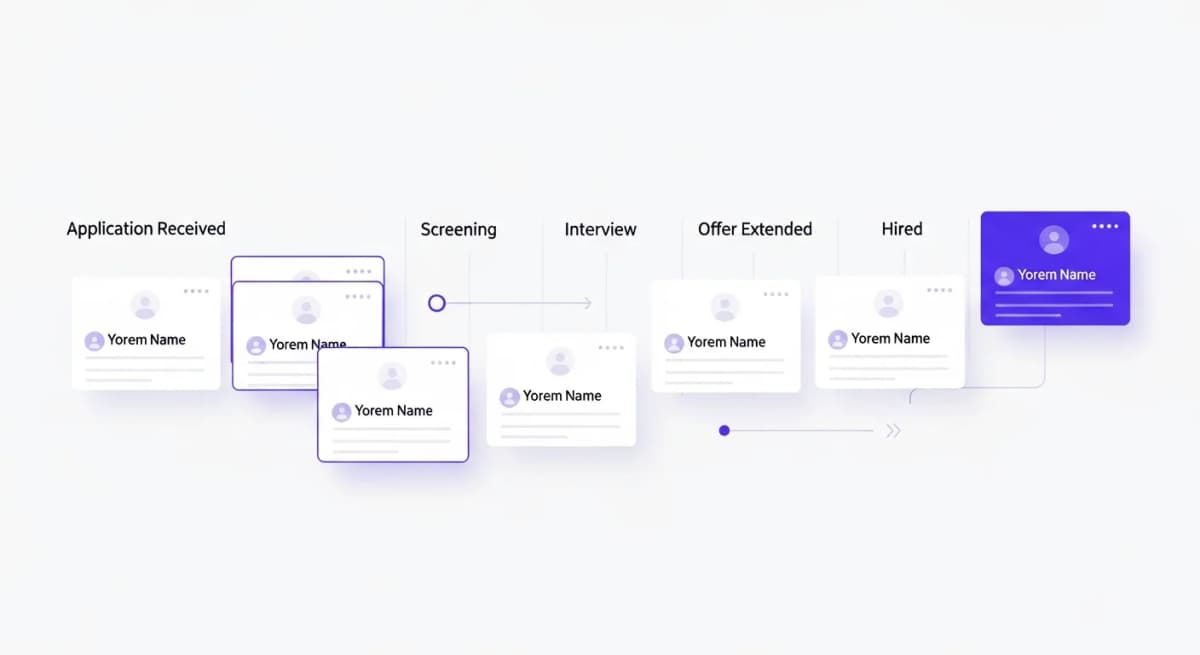
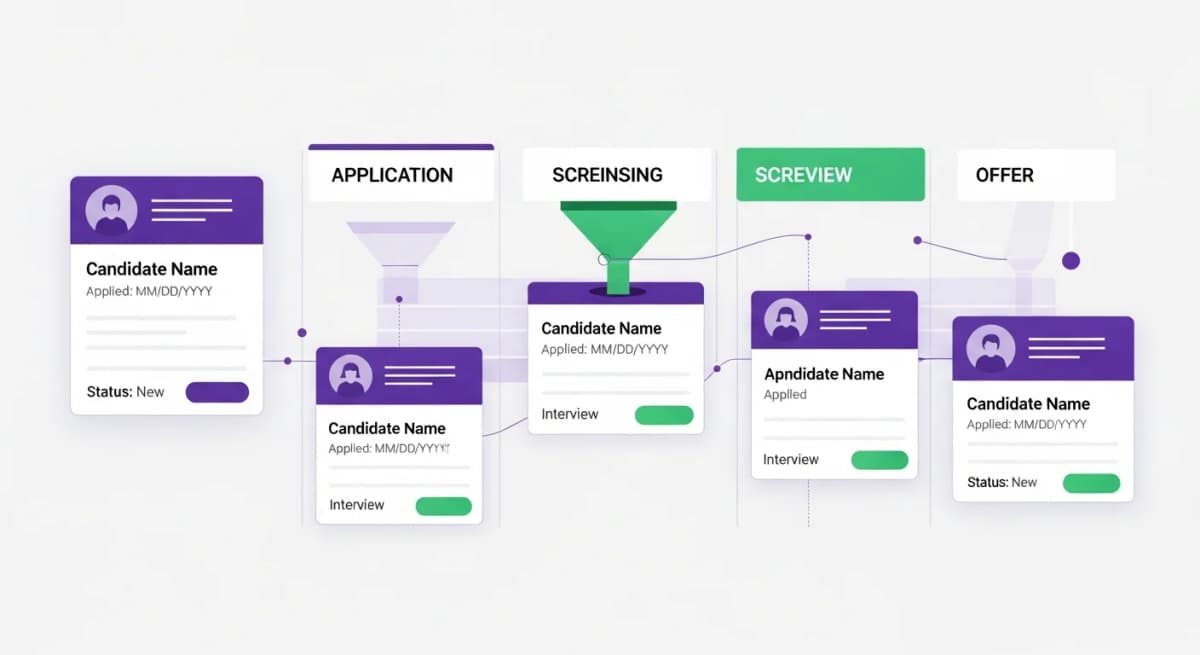
Start with your workflow. Map out how a candidate moves through your process today - from application to offer. Identify the bottlenecks, the manual steps, and the points where candidates drop off. Your ATS should solve these specific problems.
Key Evaluation Criteria
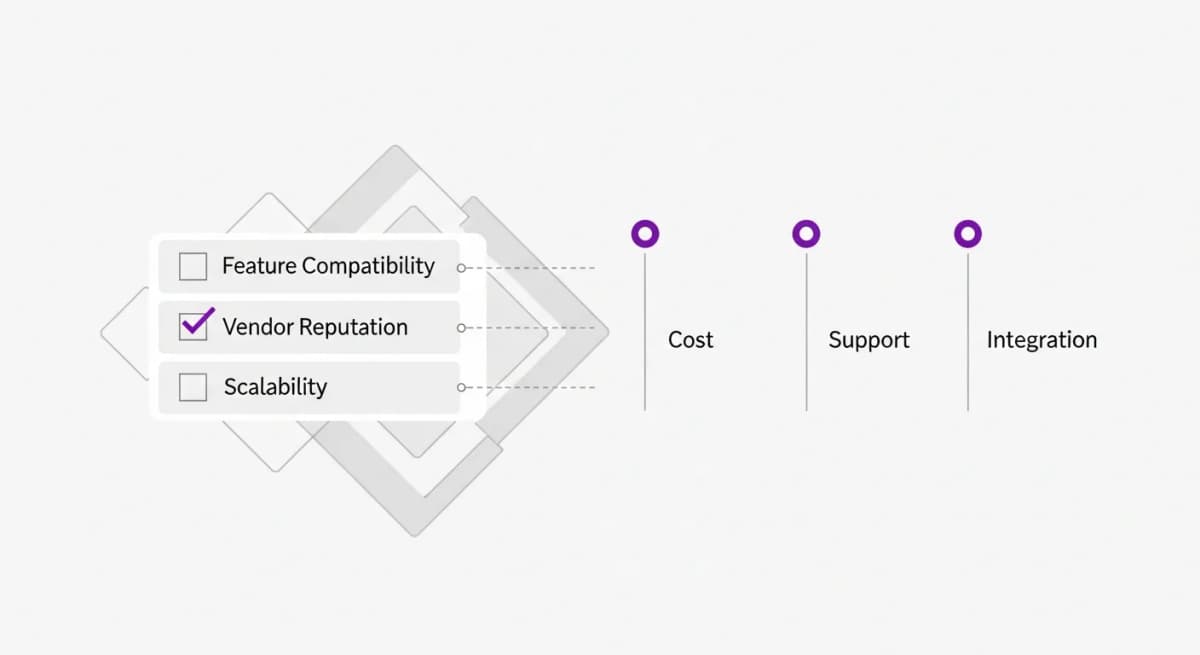
Ease of use should be your top criterion. An ATS only works if recruiters, hiring managers, and interviewers actually use it consistently. If it requires extensive training or creates friction in the hiring process, adoption will suffer.
Integration depth is the second priority. Your ATS needs to connect with job boards for posting, your email for communication, your calendar for scheduling, and ideally your HRIS for onboarding. Each missing integration creates manual work.
AI capabilities are increasingly important. Look for AI-powered resume screening, automated candidate communication, interview scheduling, and analytics. These features save significant recruiter time at scale.
Reporting and analytics help you optimise over time. Time-to-hire, source effectiveness, pipeline conversion rates, and diversity metrics should be available without custom report building.
Matching ATS to Company Size
1-25 employees, hiring 1-5 people per quarter: You need simplicity and low cost. Alexia.ai's built-in ATS (free for everyone during the Launch Offer, then included on the Free plan with pay-as-you-go AI usage) or basic tools like Breezy HR will serve you well. Don't over-invest in features you won't use.
25-100 employees, hiring 5-15 per quarter: Integration depth and automation become critical. You need an ATS that connects to your HR system and supports multiple hiring managers with different permissions. This is where unified platforms like Alexia.ai provide the most value.
100-500 employees, hiring 15+ per quarter: Enterprise features matter - compliance reporting, advanced analytics, structured hiring scorecards, and robust permission systems. Evaluate Greenhouse, Lever, or Alexia.ai depending on whether you want a standalone ATS or a unified platform.
Stop reading about AI reporting. Start using it.
See how Alexia.ai automates the exact workflows covered in this article.
The Total Cost of Ownership Trap
ATS pricing is deceptively simple on the surface. But the real cost includes adjacent tools you need to make it work. A standalone ATS like Greenhouse ($6,000-$15,000/year) doesn't include HR management, team communication, or video conferencing.
Calculate your total people-tech stack cost: ATS + HRIS + communication + video + any middleware or integration tools. For many companies, this total exceeds $25,000 per year - often more than a unified platform that includes everything.
Also factor in time costs: setting up integrations, maintaining them when APIs change, training team members on multiple interfaces, and managing multiple vendor relationships. These hidden costs compound as your team grows.
Running an Effective ATS Evaluation
Involve end users early. Get recruiters, hiring managers, and at least one interviewer into demo sessions. Their feedback on usability matters more than feature comparisons.
Test with real scenarios. Ask vendors to walk through your actual hiring workflow in their platform. How would you post a job, screen 50 applicants, schedule 5 interviews, and make an offer? The answers reveal practical limitations.
Check references at your stage. Talk to companies your size in similar industries. What works at a 500-person enterprise may be overkill for a 30-person startup. Ask about implementation time, support quality, and surprises after purchase.
Finally, evaluate the platform, not just the product. Does the vendor's roadmap align with your needs? Is the company financially stable? How do they handle data migration if you decide to switch later?

About the Author
Simon Lee
Co-Founder, Teamified
Simon Lee is the co-founder and CEO of Teamified, with deep expertise in cloud architecture, fintech, and SaaS platforms. He leads the vision behind Alexia.ai, designing AI-powered solutions that drive operational efficiency and business growth across global teams.
Connect on LinkedInTry Alexia.ai's Built-In ATS
See how a unified platform simplifies your ATS decision. See the full Launch Offer.